 Cooper Clyde
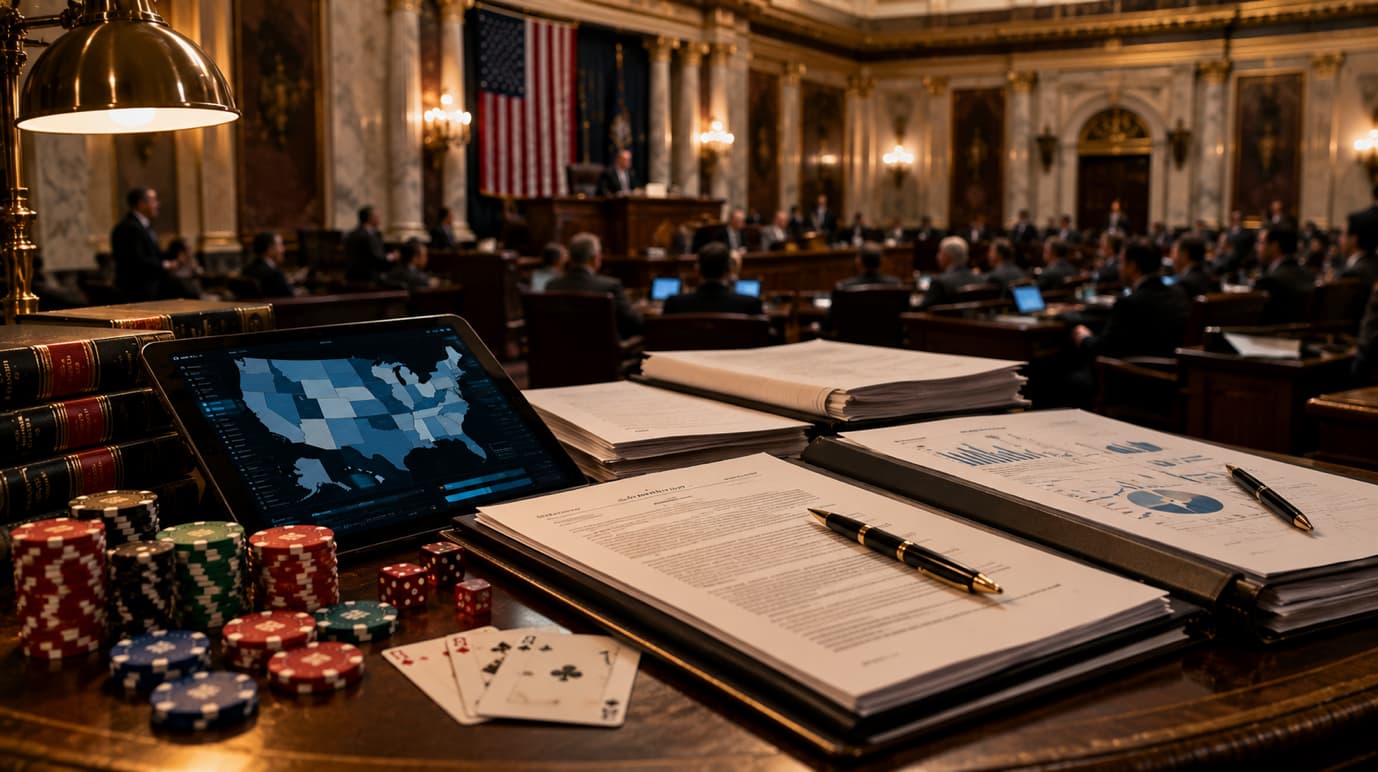
America never enacted a single online gambling law; it enacted fifty debates on who is to write it. Washington lays a bottom with a few federal laws, and every state lays its own roof of licences, taxes and prohibitions over it. The outcome is the most closely monitored regulatory experiment in the industry.
Governments still drafting their own statutes study the American notes closely, and their citizens are even further ahead. Kiwi players preview that future already: after a short sign up on the official website, anyone can log in at Talismania casino – members log in once, a saved login does the rest, and the Talismania Online Casino shows New Zealand the polish NZ audiences will expect from the Talismania Casino once local rules arrive.
The Federal Floor and the State Ceiling
The federal layer is thin and largely old. The Wire Act of 1961 was drafted to sever the telephone lines between bookmakers and, after decades of legal wrangling, the courts have limited it to interstate sports betting.
The Unlawful Internet Gambling Enforcement Act of 2006 included a payments rule as opposed to a gambling rule. It instructs banks not to take illegal bets but leaves the definition of illegal to the state in which the player is located.
The turning point was in 2018 when the federal sports-betting ban was struck down by the Supreme Court in Murphy v. NCAA. The ruling sent the pen back to the states and the states have been writing since then.
Tribal gaming introduces a third dimension. Compacts negotiated under the Indian Gaming Regulatory Act allow certain states, including Connecticut and Michigan, to introduce tribes into the online market as licensed operators, not observers.
Fifty Laboratories: Licensing State by State
In 2013, New Jersey became the first state to permit full online casino play, under the oversight of its Division of Gaming Enforcement, and its rulebook was the model. It was modified in Pennsylvania and Michigan by their respective gaming control boards, with each requiring all online brands to have a licensed land-based partner.
The club stays deliberately small. By this year seven states operate live online casino markets, including New Jersey, Pennsylvania, Michigan, West Virginia, Connecticut, Delaware and Rhode Island, and Maine has legalised on paper and about forty states halt at sports betting.
The quiet policy is done by licence conditions. The permit itself contains geolocation checks, identity checks, deposit limits and statewide self-exclusion registries, meaning that consumer protection accompanies the licence and not another law. A licence in such markets is not a permission slip, but an operating manual with fines attached.
The shopping of each other homework by legislatures is now open. The most recent iGaming bill in New York is based on the tax collection of its neighbours, and the Illinois and Massachusetts hearings have used the Michigan experience of consumer-protection as a reason why the model should be adopted.
What the Tax Man Collects

The most divergent area of the laboratories is in the rates. New Jersey has long taxed online casinos in the mid-teens and then pushed the rate to twenty per cent in a recent budget, Michigan bases its operators on a sliding scale, and Pennsylvania infamously takes fifty-four per cent of online slot revenue.
The money also lands in the hands of each legislature. New Jersey allocates casino taxes to seniors and residents with disabilities programmes, Michigan to its School Aid Fund, and a number of states cut specific portions to problem-gambling services.
The amounts are worth the paperwork. Controlled online casino gambling generated billions in gross revenue last year and in New Jersey the online floor has already started to out-earn the Atlantic City halls where it has licences.
Watching from Wellington
The most obvious example of a government reading those American notes is New Zealand. Its Online Casino Gambling Act was enacted this year, the Department of Internal Affairs is auctioning up to fifteen licences and the regulated market will open on the first of December.
The rulebook steals the state-lab vocabulary: deposit limits, required breaks, an autoplay prohibition and strict advertising regulations, all of which are written into the licence itself. It is the American model with the volume turned up.
The market side is not waiting either: New Zealand users complete registration, sign in, and open Gambloria online through the official website, where the Gambloria online casino logs each NZ login against its own standards — the voluntary rulebook the Gambloria casino applies before any statute asks. When the December whistle blows, early movers want their paperwork already familiar.
Exporting the Playbook
Regulators trade the manner in which operators trade software. The American self-exclusion systems, geolocation standards and advertising codes are found in consultation papers in Wellington to Warsaw, with the serial numbers still visible.
The export is carried through people as well as documents. The compliance officers, testing labs and payment auditors operate across jurisdictions, bringing the habits of one market into the next licence application they submit.
Even enforcement styles are migratory. Wellington intends to police its new perimeter by banks and payment channels, a page borrowed directly out of the manuals of older regulators.
Dublin Writes Its Own Statute
Ireland provides the European version. The Gambling Regulation Act of 2024 established a single national regulator, the GRAI, which started to establish its licence regime in 2025 with betting first and gaming second, a social-impact fund and strict limits on the time of the day when gambling may be advertised. The American model increases regulators whereas the Irish one centralizes them.
Irish players already behave like a licensed cohort: after registration on the official website, players in Ireland sign in to play WonderLuck casino games — every login the Wonder Luck online casino records feeds the compliance file the WonderLuck casino would show IE inspectors. Dublin’s examiners, when they arrive, will find the audience already trained.
The Scoreboard So Far

The long arc is easiest to see in one place. Wikipedia’s survey of gambling in the United States traces the cycle from colonial lotteries through riverboat revivals to the app era, and the pattern repeats: prohibition, experiment, regulation, revenue.
What is not reflected on the scoreboard is a federal takeover. More than a decade of state-regulated iGaming has passed without nationalising the regulations, which is the noisiest policy indicator in the file.
The American experiment continues to operate since each legislature receives its own lab bench. Tax rates, licence limits and player safeguards are put to the test against live markets and the outcomes are self-publishing in monthly revenue reports. Wellington and Dublin are merely the latest scholars to draw up a chair.